Noah Building Systems Request a Quote
Industrial tents & marquees

Industrial Tents and Temporary Marquees to Hire or Buy

Heavy-duty covered space for short-term, changing or relocatable requirements. Our industrial tents are clear span and specified for the site, with hire or purchase options confirmed for the selected system.

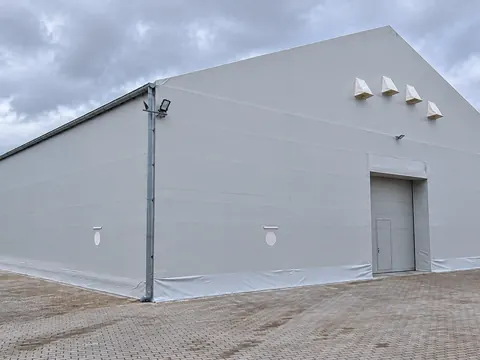
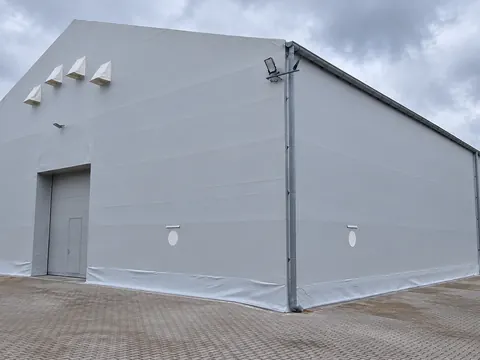
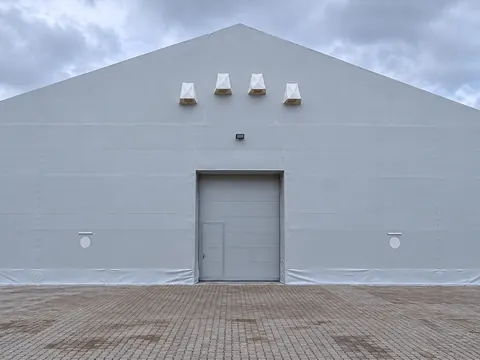
A steel-framed Noah building on a working site
Overview

Why Choose an Industrial Tent?

Some space problems do not sit still. A contract runs for eight months on one site and then moves to another. A refurbishment needs cover while the real building is out of action. A project brings volume that will be gone by spring. Anything permanent is the wrong answer, and even a fully clad temporary building can be more than the job needs.

An industrial tent is the lightest way to solve it properly and the quickest to stand up. Fabric cladding on a suitable steel or aluminium frame gets a weatherproof, workable structure onto site faster and at lower cost than a panel-clad building, and it is designed from the outset to come down and go back up somewhere else.

The word "tent" undersells it. These are engineered buildings, calculated for the wind and snow loadings at your postcode and specified for continuous use rather than for a weekend.

Specification

What an Industrial Tent Can Include

Fabric structures vary enormously in quality. Four things separate an industrial tent from an event marquee.

01

Clear Span, With No Internal Columns

Uninterrupted internal floor space with no intermediate columns, across the available span range of the selected system.

We check the required usable width, height and layout against the selected system before confirming the building.

02

Built to Be Moved

The frame bolts together and the fabric fits to it, so dismantling is genuinely the reverse of erection rather than a demolition. Components are designed to be transported, stored and reused, which is what makes a tent the right choice when the same structure has to serve three sites over five years.

03

Fabric, Doors and Optional Upgrades

Reinforced PVC is the standard cladding, in solid or translucent panels where daylight matters. Roller shutters, personnel doors, gable openings, lighting and thermal linings are all specified against the job. Where a requirement turns out to be long-term and occupied, we assess a compatible insulated system instead.

04

Engineered for Your Site

Wind and snow loadings are calculated for your postcode and your site rather than assumed, and the structural calculations and certification for the system you are quoted are issued with the building. Exposure, ground conditions and the way the building will be used all change those figures, which is why they are confirmed at design stage rather than published.

Applications

Where Industrial Tents Are Used

The industrial tent is largely the same in each case. What changes is how long it stays and how often it moves.

Short-Term and Project Cover

Space for the length of a contract or a programme, then relocated. Standard across construction and infrastructure work, where the site itself has an end date.

Temporary Marquees for Industrial Sites

Industrial tents used as covered working and holding areas that need to be up quickly and are not intended to be permanent. Where the requirement turns out to be long-term and secure, a temporary storage building is usually the better economic answer.

Business Continuity

Cover after a fire, flood or roof failure, or during a refurbishment, so production and storage continue while the permanent building is unavailable. Speed matters more than anything else here.

Peak and Overflow Capacity

Extra covered space for a defined peak, taken on hire and returned afterwards. See temporary building hire for how the monthly model works.

Whether you need cover for one season, one project or one site after another, Noah Building Systems supplies industrial tents and temporary marquees to hire or to buy, specified for your site. See the full range of temporary industrial buildings, or compare against temporary buildings for sale.

Request a Quote
The brochure

Download the Noah brochure

Explore the building systems we supply, the main specification choices and what to expect from installation.

  • Plan the space. A practical guide to span, length and eave height before you brief the project.
  • Compare specifications. Insulation, cladding, doors and access, with the purpose of each option explained.
  • Share it with your team. A single PDF for colleagues in operations, finance and procurement.
  • Prepare the site. The key points on groundworks, access and the scope of a quotation.

We send the brochure by email, and nothing else unless you ask.

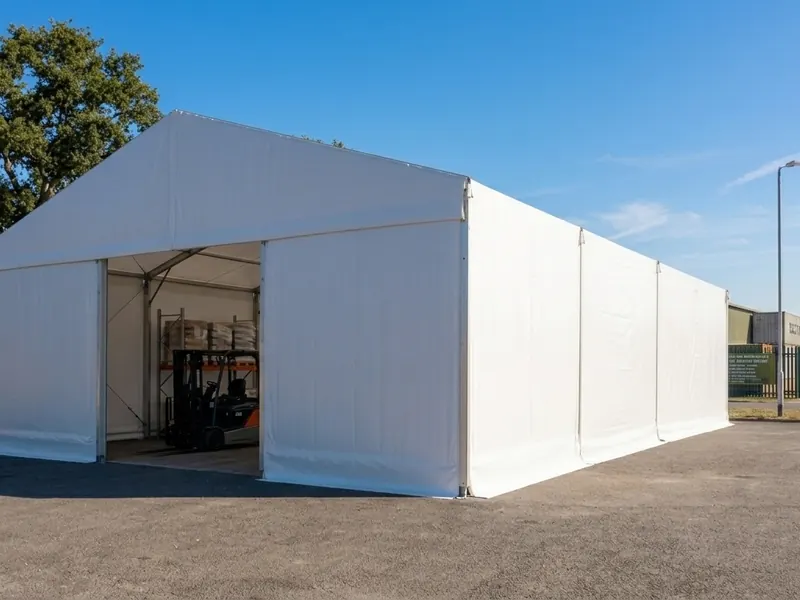
A white steel-framed temporary building with a PVC roof
Pricing

Request a quote

Send us the approximate dimensions, postcode, intended use and likely duration. We can prepare an initial figure without a site visit.

  • Hire and purchase compared. Both options are priced against the same brief, so you can compare them properly.
  • Built around your specification. The figure reflects the size, insulation, access and intended use of your building.
  • An indicative programme. We include the likely project sequence alongside the initial cost.
  • No obligation. Use the quotation to review the project internally and come back when you are ready.
Hire or buy?

We will contact you about your request. Survey dates are arranged with you, and pricing is confirmed against the site and agreed specification.

Good to know

Frequently asked questions

How Is an Industrial Tent Different From a Marquee?

They look related, and they are built to completely different standards, which is the single most useful thing to understand before buying either.

An event marquee is designed for short, supervised, seasonal use. It goes up for an occasion, comes down before winter, and the wind and snow cases it is designed against reflect that. Nobody is expecting it to stand through a February gale unattended with stock inside.

An industrial tent is engineered as a building. The frame is calculated for the wind and snow loadings at your postcode across continuous year-round use, the structural calculations come with it, and the fabric, fixings and anchoring are specified to match. That is what allows it to hold stock, house a process, and be insured accordingly.

The practical test is duration and contents. If the structure will stand through winters, be left unattended, or hold anything you would mind losing, it needs to be an industrial specification. The cost difference is real but modest against the risk.

What Ground Can an Industrial Tent Stand On?

More ground types than a fully clad building, which is one of the reasons a tent is often the faster answer.

Existing concrete or tarmac hardstanding is the simplest case, with the frame bolted directly down. Compacted hardcore also works well. Unlike a panel-clad building holding racking, an industrial tent spreads a lighter load and can frequently be anchored to ground that would need a new slab for something heavier, which removes the groundworks step that most often delays a project.

Grass and unmade ground are usually possible with ground anchors or ballast, but come with two conditions. The surface has to be level enough for the frame to sit true, and it has to stay firm when wet, because a site that turns to mud is a site where nothing can be delivered, erected or driven on.

Whatever the surface, drainage and falls need thinking about. Water running toward the structure causes more problems than water landing on it. Send photographs of the intended location with your enquiry and we will tell you what it needs.

Can an Industrial Tent Be Used All Year Round?

Yes, provided it was specified for it, and this is exactly where an industrial specification earns its price against a marquee.

Winter is the demanding season for two reasons. Snow loading puts sustained weight on the roof, and the design has to account for the figures at your specific location rather than a national average. Wind is the other, and an exposed site, a coastal location or a position that funnels wind between existing buildings all change the calculation.

Comfort is a separate question from structure. Standard fabric cladding is weatherproof but offers very little insulation, so an unlined industrial tent tracks the outside temperature closely and condensation forms readily. Thermal linings and insulated panel options both address it, and the choice depends on whether the space holds goods or people.

Some operators still take a tent down over winter and re-erect in spring, which is a legitimate strategy where the requirement is genuinely seasonal. Say at the quote stage which pattern you expect, because it changes both the specification and the commercial structure.

Can an Industrial Tent Be Printed With Our Branding?

Yes, and this is one of the few practical advantages fabric cladding has over panel systems.

PVC accepts large-format printing directly, so company names, logos and livery can be applied across gable ends or along the full length of the structure. On a roadside or public-facing site that turns a functional building into a visible asset, and it costs a fraction of signage on a permanent unit. Panel-clad buildings usually take applied signage instead, which is more limited and more expensive.

Two things are worth planning for. Print is applied to the fabric, so if the structure is later reconfigured with more or fewer bays, the branded panels need to end up somewhere sensible. And fabric is a consumable that gets replaced periodically over the building's life, which is a reprint each time.

If the structure is going somewhere the public or your customers will see it, raise branding at the quote stage. Printing panels before they are fitted is straightforward and considerably cheaper than doing it afterwards.

Is a floor included with the building?

Floors are not included with our temporary, semi-permanent or permanent buildings. The surface beneath the building, such as existing concrete or hardcore, forms the floor. Its suitability depends on the intended use, loads and ground conditions; any necessary groundworks need to be arranged separately. Noah can include sports flooring for sports projects, with the scope agreed in the quotation.

See all frequently asked questions