Both need designing in, and both are more demanding on a covered court than on a general-purpose building.
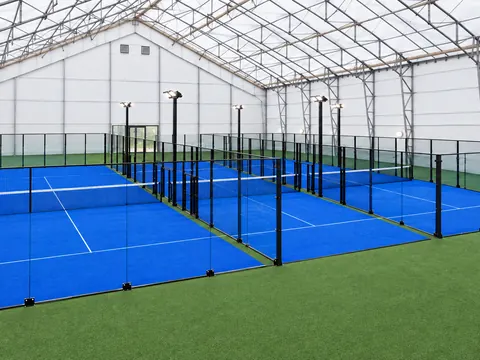
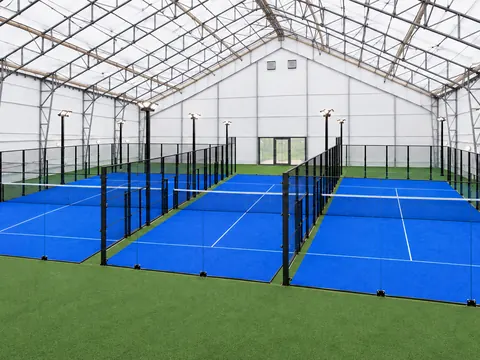
Lighting has to reach a playable level evenly across the whole court, with the fittings positioned and shielded so players looking up to play an overhead are not looking into a light source. Uneven lighting produces shadowed corners, and glare is a genuine playing problem rather than a comfort issue. Competition standards set higher levels again than club play, so specify against the standard you intend to run to.
Ventilation matters because of condensation. A covered court holds warm, humid air generated by players, and when that meets a cold roof surface, moisture forms and eventually reaches the playing surface. A damp court is a slippery court, which is a safety issue as much as a playing one. Ridge and eaves ventilation, sometimes with mechanical assistance, moves that air out.
Both are cheaper and better resolved at the design stage. Retrofitting lighting positions or a ventilation strategy to a structure that is already standing is disruptive and rarely as effective.